
Declaration of Independence — Essay 5: “The Right to Revolution”
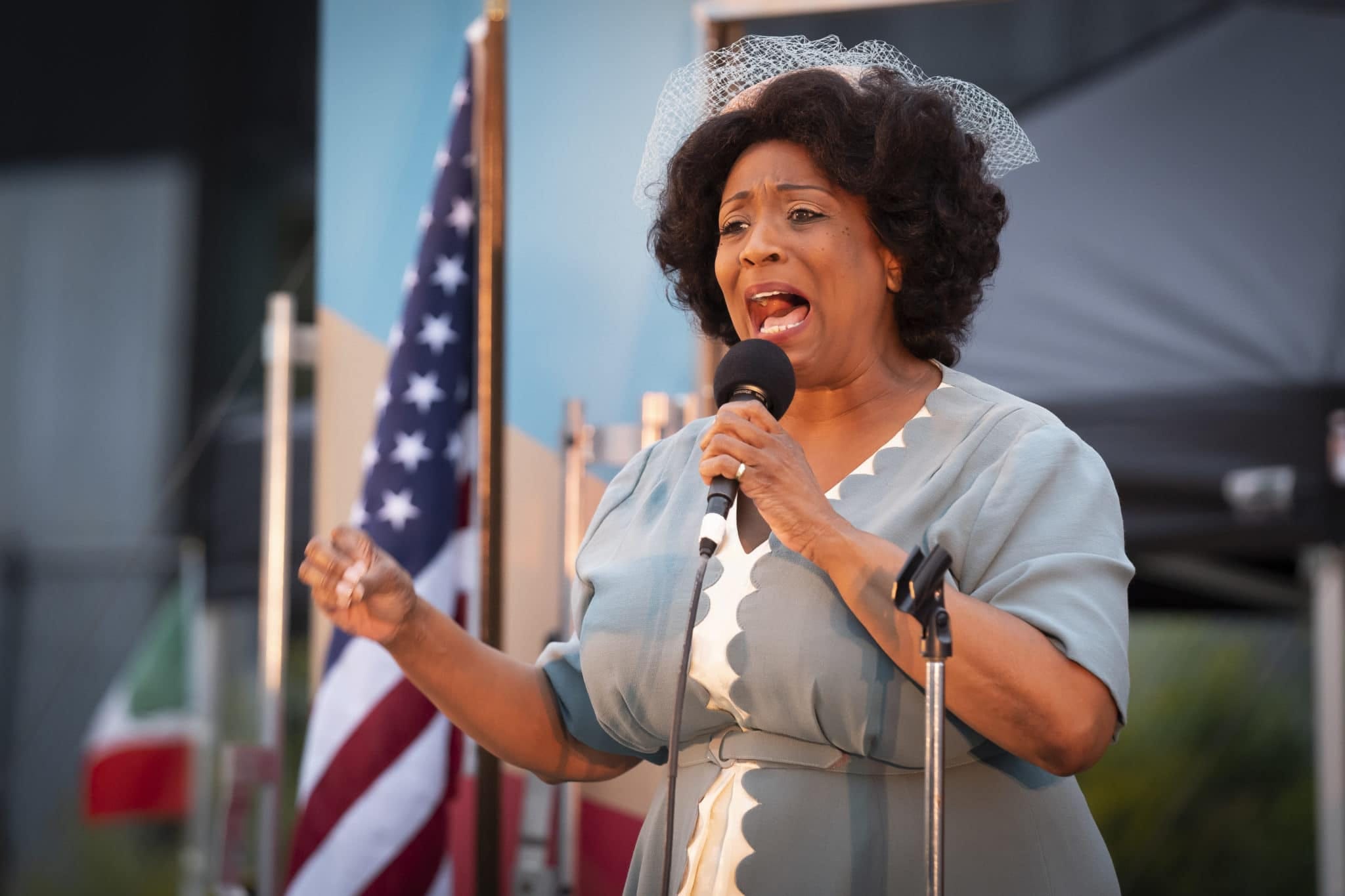
A little change of pace this month with my 5th essay on the Declaration of Independence. The words and vision continue through the words of Douglass, King, and Hughes but I thought it timely to ensure that the female voice and perspective is included within this ongoing series.
The picture this month features Fannie Lou Hamer. She was a woman from Mississippi who MLK knew well as a voting and women’s rights activist during the ‘60’s Civil Rights Movement (see https://en.wikipedia.org/wiki/Fannie_Lou_Hamer and https://www.pbs.org/video/america-reframed-fannie-lou-hamers-america-is-this-america/.
Hamer was a powerful voice for women of all races and a played a key role in getting the Voting Rights Act of 1965 approved by President Johnson, just sixty short years ago after a long, decades old battle. Again, MLK’s “arc of justice” eventually prevailed but unfortunately voting rights, among a vast array of other freedoms, are under assault again today by the Trump regime.
Where will the leadership come from this time to protect these well-earned rights for all? Who are the Douglass’s, King’s, Hughes’s, and Hamer’s of today? Note that none of them were politicians in the strict sense of the term and were produced from the Black experience of resistance and resolve where we can learn so much if we are willing to open-up are eyes and ears to their insights and wisdom.
There is a new civil rights movement developing as result of the last Presidential election and the horrors we are continuing to endure within Trump’s first (or fifth!) year in office. So, this essay titled “The Right to Revolution” is timely and dovetails conveniently with the new Ken Burns PBS documentary, ‘The American Revolution.’
From the 3 million ‘Hands off’ protesters on April 5th, to the 5 million at the first ‘No Kings’ on June 14th, then the 7 million at the 2nd ‘No Kings’ on October 18th, followed by the Blue Wave tsunami on Election Day a few weeks ago, a movement is on the march and growing rapidly.
Movement leadership like our three icons and Hamer will continue to be identified, emanating out of these primarily grass roots efforts and that of the voting box. And it must go well beyond the politician class; i.e., from our faith communities and their ‘bloody pulpits’, the business and education sectors, other important institutional pillars of society, and include a broad array of younger people as well which is already happening.
And the mainstream media must awake from its slumber at best, and indifference at worst, where it continues to normalize Trump’s behavior and steadily increasing authoritarianism.
Two other thoughts: there will be some repetition from previous essays and I hope readers will see that more as reinforcement versus annoyance. Secondly, a continued shout out to my resource partner, CHAT GPT, for its contributions with each of these essays.
The Right to Revolution: The Ultimate Safeguard of Liberty
I. Introduction: Declaring a Right to Rebel
Among the boldest claims in the Declaration of Independence is this:
“That whenever any Form of Government becomes destructive of these ends, it is the Right of the People to alter or to abolish it, and to institute new Government…”
This single sentence was treason in 1776—a direct justification for overthrowing British rule. But it was also something more enduring: a universal principle that no government is above its purpose of securing rights.
If government becomes destructive of life, liberty, and the pursuit of happiness, the people not only may—but must—replace it.
This was not a call to permanent instability or chaos. The Declaration warned that “prudence” counsels against changing government for “light and transient causes.” But it insisted there is a moral threshold: beyond it, revolution is not only a right but a duty.
The right to revolution is the ultimate safeguard of all other rights. It says no ruler, constitution, or system is final. Sovereignty lies with the people, who may reclaim it.
Yet, like the Declaration’s other principles, this right was proclaimed in the same breath as practices that denied it to many. Enslaved people, women, Indigenous nations, and the poor were excluded from the power to consent or resist.
Over time, Americans who were denied their rights drew upon the Declaration’s revolutionary logic to demand justice. Frederick Douglass, Martin Luther King Jr., and Langston Hughes each confronted the gap between the promise of the right to revolution and its limited application.
They did not discard the principle. Instead, they insisted it be honored—by extending it to all.
II. The Philosophical Roots of the Right to Revolution
The right to revolution is older than the Declaration. It draws from Enlightenment philosophy—especially John Locke’s Second Treatise of Government. Locke argued that political society is founded on a social contract to protect natural rights.
When rulers betray that trust, the contract is broken. The people then regain their original liberty to form a new government.
Locke wrote: “Whenever the legislators endeavor to take away and destroy the property of the people, or to reduce them to slavery under arbitrary power, they put themselves into a state of war with the people, who are thereupon absolved from any further obedience.”
This logic had profound implications. It justified not just American independence but any revolution against tyranny.
It said government is not an end in itself. It is a means to secure rights. When it fails, it can be replaced.
The Founders used this reasoning to justify their own rebellion. But they rarely asked what it meant for those they governed without consent—especially enslaved people and Indigenous nations.
III. The American Revolution: Promise and Paradox
The Declaration’s justification for revolution inspired generations. It became a global symbol for struggles against colonialism and despotism.
Yet from its founding, the United States was marked by profound contradictions:
- Enslaved Africans were denied any rights, let alone the right to rebel.
- Native nations were conquered, removed, or destroyed when they resisted.
- Women were denied political participation and legal independence; note Fannie Lou Hamer’s contributions in the 1960’s.
- The poor often lacked effective voice or representation.
The Revolution was fought in the name of liberty but often preserved or expanded domination.
Even so, the idea that the people may overthrow unjust government proved durable. It became a moral yardstick for measuring American hypocrisy and possibility alike.
IV. Frederick Douglass: The Revolution Betrayed
Frederick Douglass was one of the most powerful voices demanding that America confront this contradiction.
In “What to the Slave is the Fourth of July?” (1852), Douglass mocked the idea that the nation truly honored the principles it proclaimed:
“Your shouts of liberty and equality, hollow mockery! … Do you mean, citizens, to mock me, by asking me to speak today?”
Douglass understood the revolutionary logic of the Declaration better than many of its authors. He quoted its language about altering or abolishing destructive government to justify abolition:
“If the slave has a right to liberty, he has a right to claim it.”
Douglass did not reject the Declaration. He claimed it. He argued that enslaved people had not only the right but the duty to resist.
“If you will not let the slave go free, he will take his freedom.”
Douglass thus radicalized the Founders’ words. He held America accountable to its own revolutionary standard.
V. The Slave Revolts: Claiming the Right to Revolution
Throughout American slavery, the enslaved themselves acted on this principle—despite being denied its legal or moral recognition.
Gabriel Prosser (1800), Denmark Vesey (1822), Nat Turner (1831)—these leaders planned or led uprisings to overthrow the system that enslaved them.
The Haitian Revolution (1791–1804), though outside the U.S., terrified American slaveholders. It showed that enslaved people could win freedom through revolution.
White Americans often called these revolts “insurrections” or “massacres,” ignoring the fact that they were logical applications of the Declaration’s own doctrine:
“When a long train of abuses and usurpations … evinces a design to reduce them under absolute Despotism, it is their right, it is their duty, to throw off such Government.”
Douglass understood this. He refused to condemn enslaved people for seeking freedom through force:
“I am ever ready to say, if the slaves will rise in rebellion and throw off their chains, I shall not censure them.”
VI. The Civil War as Second Revolution
The abolition of slavery came not through peaceful reform but through civil war—a violent conflict that fulfilled, in some measure, the Declaration’s revolutionary promise.
Lincoln invoked the Declaration repeatedly. In the Gettysburg Address, he described the war as a test of whether a nation “conceived in Liberty, and dedicated to the proposition that all men are created equal” could endure.
Frederick Douglass understood emancipation as a revolutionary act. He saw the war as the necessary destruction of a government that had become destructive of human rights.
But even after abolition, the promise of the right to revolution remained incomplete. Reconstruction collapsed under white supremacist violence. Black Americans faced new forms of domination without the right to resist them effectively.
VII. Martin Luther King Jr.: Civil Disobedience as Moral Revolution
Nearly a century after the Civil War, Martin Luther King Jr. faced another government failing to secure rights. Segregation, disenfranchisement, and racial terror were enforced by state power.
King’s genius was to link the Declaration’s revolutionary principle to nonviolent civil disobedience.
In his Letter from Birmingham Jail (1963), he justified breaking segregation laws:
“One has not only a legal but a moral responsibility to obey just laws. Conversely, one has a moral responsibility to disobey unjust laws.”
King argued that unjust laws degrade human personality and are out of harmony with moral law. Such laws lack legitimate authority.
He echoed the Declaration’s logic: when government becomes destructive of rights, people have a duty to resist. But for King, this resistance must be nonviolent:
“Nonviolent resistance … does not seek to defeat or humiliate the opponent, but to win his friendship and understanding.”
King’s approach transformed revolution from armed uprising to mass moral confrontation. Yet it remained revolutionary in essence. It demanded the restructuring of unjust social relations.
VIII. The “Promissory Note” of Revolution
In his “I Have a Dream” speech (1963), King invoked the Declaration directly:
“When the architects of our republic wrote the magnificent words of the Constitution and the Declaration of Independence, they were signing a promissory note…”
That note, he said, was a promise that all would have the rights of life, liberty, and the pursuit of happiness. But America had defaulted on that promise for Black citizens.
King’s movement was not begging for charity but demanding payment on that debt. In other words, he was invoking the right to revolution as a claim for radical change.
While King rejected violence, he did not reject confrontation. He forced the nation to choose: reform or face deeper conflict.
“Those who make peaceful revolution impossible will make violent revolution inevitable.” (A sentiment shared with John F. Kennedy.)
King understood that the right to revolution could take many forms—but its essence lay in the refusal to accept unjust power.
IX. Langston Hughes: The Dream Deferred, the Explosion Awaited
Langston Hughes offered a poet’s insight into the cost of denying revolution. In “Harlem”, he asked:
“What happens to a dream deferred?
Does it dry up … or does it explode?”
Hughes recognized that denying people their rights is not stability but delayed crisis. When demands for justice are ignored, the result is not peace but tension—ultimately, revolt.
In “Let America Be America Again,” Hughes wrote:
“O, let America be America again—
The land that never has been yet—
And yet must be…”
Hughes refused to discard the American dream. Instead, he demanded it be made real. The revolution he imagined was both moral and structural:
- Ending exploitation of workers.
- Ending racial oppression.
- Recognizing the humanity of all.
His poems did not call for violence but warned of its inevitability if injustice persisted. They were revolutionary in their insistence on equality.
X. The Moral Limits of Obedience
The Declaration asserts that people should not overthrow government for “light and transient causes.” But it equally insists that when abuses are systematic, revolution is justified.
This principle has a moral logic:
Obedience to unjust authority is complicity in injustice.
The duty to resist arises when legal remedies are exhausted or denied.
Frederick Douglass applied this to slavery. He argued that enslaved people had no obligation to obey masters who stole their liberty.
Martin Luther King Jr. applied it to segregation, arguing that unjust laws were no laws at all.
Langston Hughes described the moral rot of a nation that preached freedom while denying it.
All three recognized that moral order must sometimes be broken to create a just order.
XI. The Right to Revolution and American History
The right to revolution is not just a theory—it is a thread through American history:
- The Revolutionary War itself.
- The abolitionist movement, which saw slavery as tyranny.
- Slave revolts, the self-emancipation of fugitives.
- The Civil War and emancipation.
- Labor strikes and union organizing, often violently suppressed.
- Women’s suffrage movement challenging male-dominated law; again, note Fannie Lou Hamer’s contributions in the 1960’s.
- The Civil Rights Movement confronting Jim Crow.
In each case, people claimed the right to challenge a system that denied them justice.
This tradition is not one of lawlessness but of moral accountability. It is a demand that government serve its true purpose: securing rights for all.
XII. The Challenge of Violence
Of course, the right to revolution raises profound questions about violence.
The Declaration justifies overthrowing destructive government—but is violence ever truly justified?
Frederick Douglass supported self-defense and understood violent rebellion. But he also saw that moral persuasion could transform institutions.
Martin Luther King Jr. insisted on nonviolence as both strategy and principle. He believed violence dehumanized both oppressor and oppressed.
Langston Hughes did not call for violence but warned that rage could boil over if justice were denied too long.
Their legacy suggests that while revolution is sometimes necessary, it is best achieved by transforming hearts, laws, and institutions without bloodshed when possible.
XIII. Economic Revolution: Beyond Political Rights
Revolution is not only political. It is also economic.
Frederick Douglass understood that freedom without land, wages, or education was empty. He criticized the failures of Reconstruction to deliver true independence.
Martin Luther King Jr., in his final years, launched the Poor People’s Campaign. He argued that civil rights victories were hollow without economic justice:
“We must recognize that we can’t solve our problem now until there is a radical redistribution of economic and political power.”
Langston Hughes gave voice to workers, tenants, and the poor—those left behind by American prosperity.
Their vision of revolution was not just changing who rules but how society is structured.
XIV. The Fragility of the Right to Revolution
Though foundational, the right to revolution is never guaranteed.
Throughout history, governments have sought to suppress this right through:
- Repression of speech and assembly
- Criminalization of protest
- State violence and surveillance
- Moral delegitimization of dissent
In the modern era, those who protest injustice are often labeled “un-American.” But the Declaration itself declares dissent as the most American act when government becomes destructive.
The true danger to the republic is not protest but complacency in the face of injustice.
As Frederick Douglass warned:
“The limits of tyrants are prescribed by the endurance of those whom they oppress.”
Martin Luther King Jr. similarly cautioned against the myth of “order” when it masks oppression:
“True peace is not merely the absence of tension; it is the presence of justice.”
Langston Hughes gave language to the desperation and suppressed fury of those for whom the dream of justice had become a bitter mirage.
To honor the right to revolution means to protect the conditions that allow it to be exercised: freedom of expression, access to truth, and a public willing to act.
XV. The People as the Moral Center
The Declaration places the ultimate political authority not in any document or institution but in “the People.”
This is a staggering act of faith. It assumes that ordinary citizens can be the judges of justice, the authors of change, and the architects of new government.
Douglass believed this when he spoke to Black audiences newly freed, urging them to organize, vote, educate, and resist.
King believed this when he marched with sharecroppers, sanitation workers, and schoolchildren.
Hughes believed this when he wrote poetry in the voice of the poor, the immigrant, the betrayed—but always with hope.
The right to revolution places its bet on the conscience and courage of the people.
XVI. Revolution as Renewal, Not Ruin
The American Revolution itself did not end tyranny—it began a journey. The Declaration’s right to revolution was not a call to destroy for destruction’s sake, but to create anew.
To “institute new Government” meant building institutions that could better protect rights. It meant a revolution not just of power, but of principles.
Frederick Douglass urged not vengeance, but reconstruction.
Martin Luther King Jr. preached not retribution, but beloved community.
Langston Hughes imagined not an America destroyed, but an America finally true to its name:
“O, yes,
I say it plain,
America never was America to me,
And yet I swear this oath—
America will be!”
This is the deeper meaning of the right to revolution: not endless revolt, but the courage to rebuild.
XVII. Conclusion: The Duty to Renew
The right to revolution is not merely an option. The Declaration says it is a duty when government becomes destructive.
Douglass, King, and Hughes each accepted that duty in their time. They challenged America not to abandon its ideals but to fulfill them.
They knew that the right to revolution is not always expressed through war or overthrow—but often through moral witness, mass protest, and public renewal.
They remind us that the right to revolution belongs to all—not only those with power, but especially those denied it.
And they show that true patriotism lies not in defending government, but in defending its purpose: the equal rights of all people.
“That whenever any Form of Government becomes destructive of these ends, it is the Right of the People to alter or to abolish it…”
May we never forget that line. And may we never forget that the power to renew this nation is not locked in the past—but lives in every generation, in every citizen, in every act of courage that dares to say: justice must be done, or the people will rise again.

December 6, 2025 12:33 am /
[…] 9. Here is Bill Wynne’s, Declaration of Independence Series, Essay 5: “The Right to Revolution”; introducing this 5th essay, Ms. Fannie Lou Hamer, an important figure in the ’60’s Civil Rights movement. You can learn more about her in Bill’s prologue to the essay at https://www.wewynneauthor.com/2025/11/29/declaration-of-independence-essay-5-the-right-to-revolution… . […]